CHARLOTTE DAWSON: ON COLLECTING, THE IMAGINED OTHER
AND THE LAST USE OF THINGS
Ahead of her new exhibition opening at Humber Street Gallery, Hull, this week, artist Charlotte Dawson talked me through her object-based approach to research, photo references feeding into her work over the years and how childhood memories of collecting with family continue to shape her practice. What stands out to me about Charlotte is her sensitivity to the everyday and how she takes what might feel like a simple moment and turns it into something we recognise straight away, but might not have given it much thought as we go about our day to day. She makes us notice.
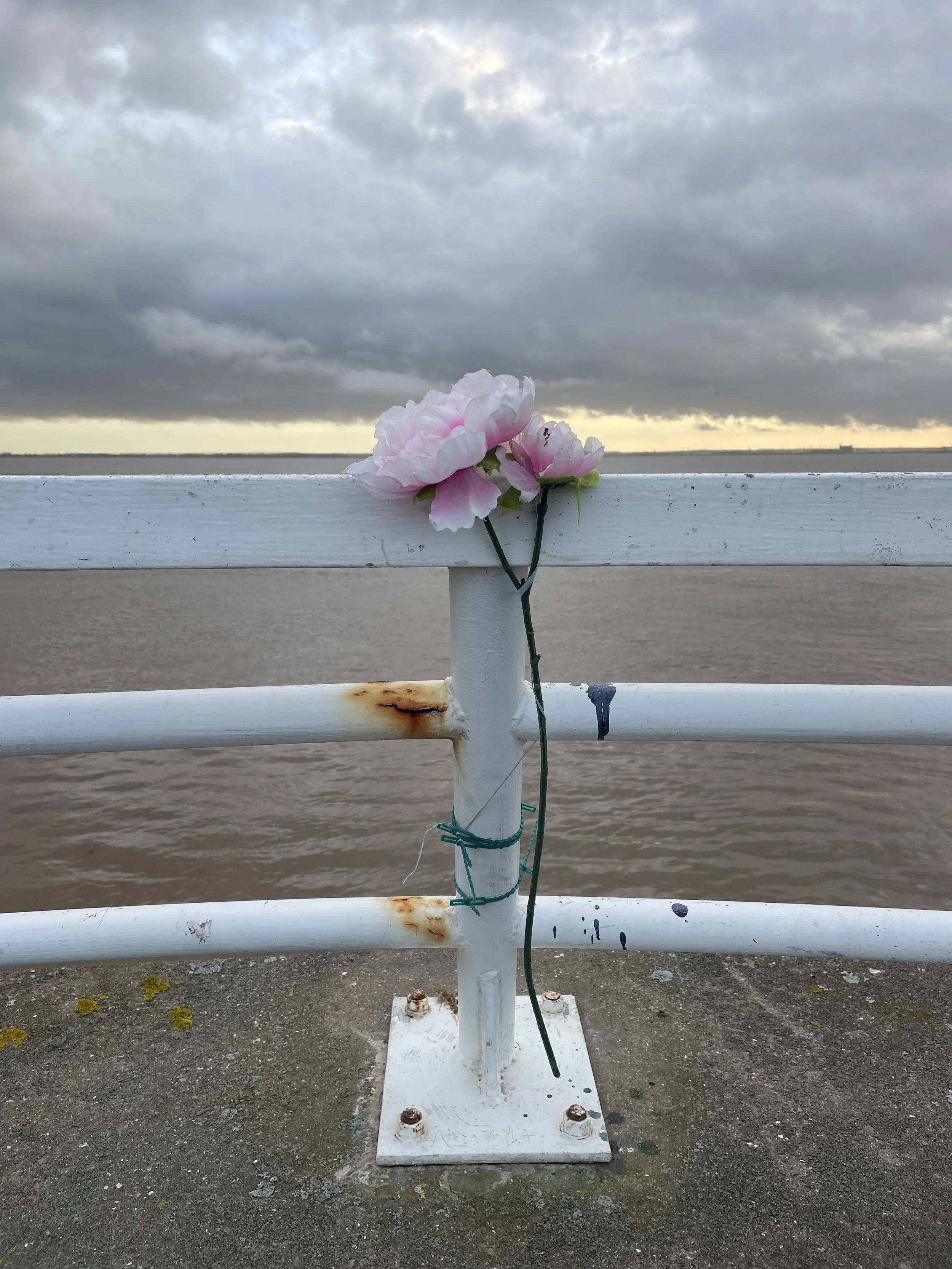
Charlotte Dawson’s Humber Street Gallery inspiration: flower memorial
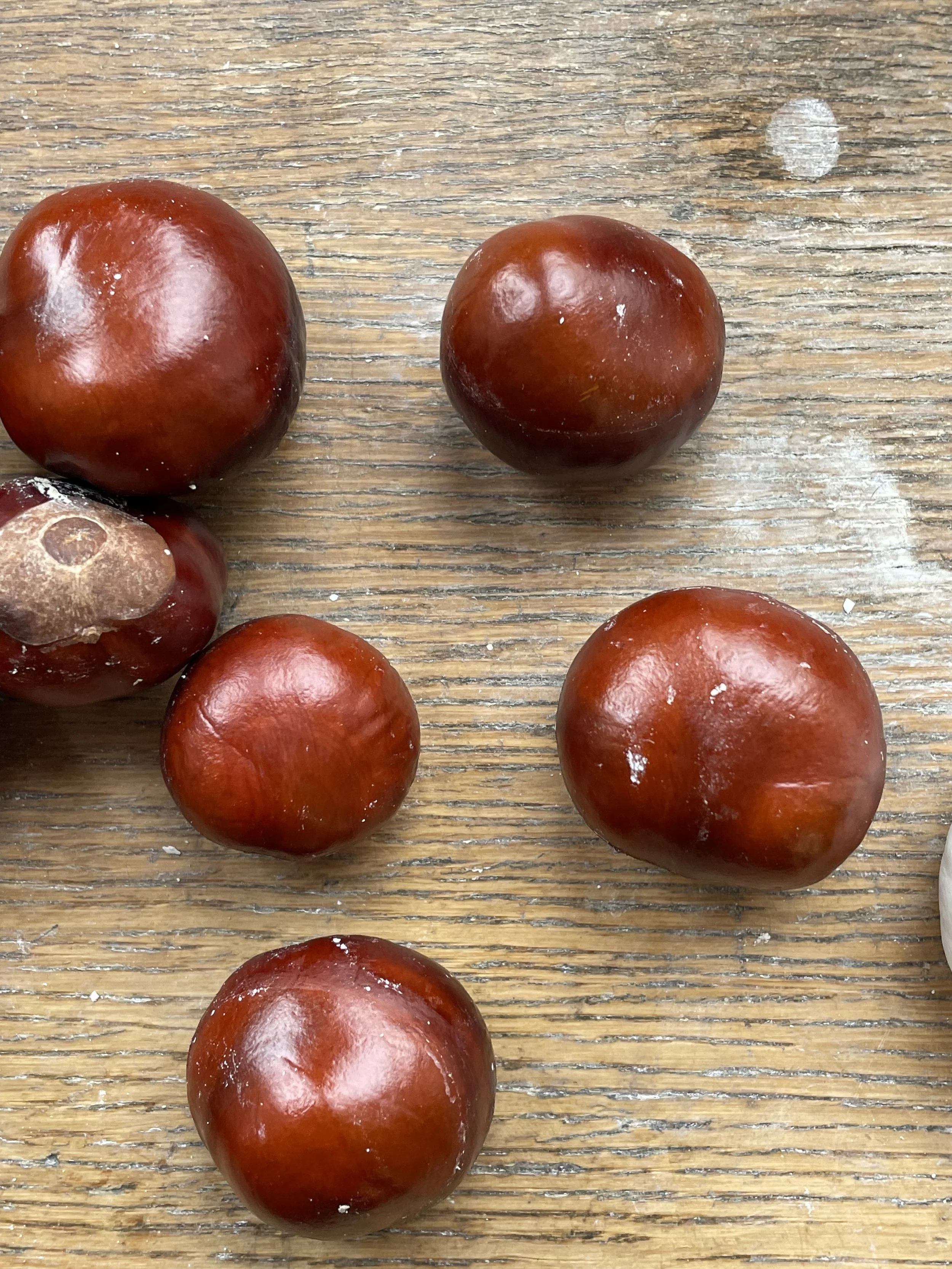
There's a piece at Charlotte Dawson's new show that she isn't ready to describe in detail before opening night. What she will say is that it will ask visitors to move through the space with the same care you'd take crossing a graveyard. Informed by a childhood collecting conkers with her brother in their local cemetery, and her mum who often turned family walks into quests to find fossils and pebbles. "I had to be dragged away from too many rocks," she says. "You can't have all of the rocks."
Talking to Dawson, I started to realise that collecting is a significant theme throughout her practice over the years and across bodies of work that keep returning to one another. And it's why her pieces so often land as familiarly unfamiliar: roadside flowers memorials, the markings road workers leave behind, to everyday objects we see and use in shared spaces. Dawson quietly re-presents and recontextualises them so that we start to notice. Since our conversation, I’ve stopped at a roadside memorial and noticed road markings from my car. They didn’t pass me by this week. I slowed down and stopped to notice.
Dawson's research process is not linear and involves a lot of relooking with care. It often starts with a photograph taken on her phone, something noticed in passing on the street or inside a public building, and then filed away without much thought. "Sometimes they sit on my phone for a long time before I realise there's a work in there," she says. What struck me here is that the photograph itself is already a collected object. Long before anything is made, Dawson gathers visual moments and they sit on her phone archive until something takes her back to them again.
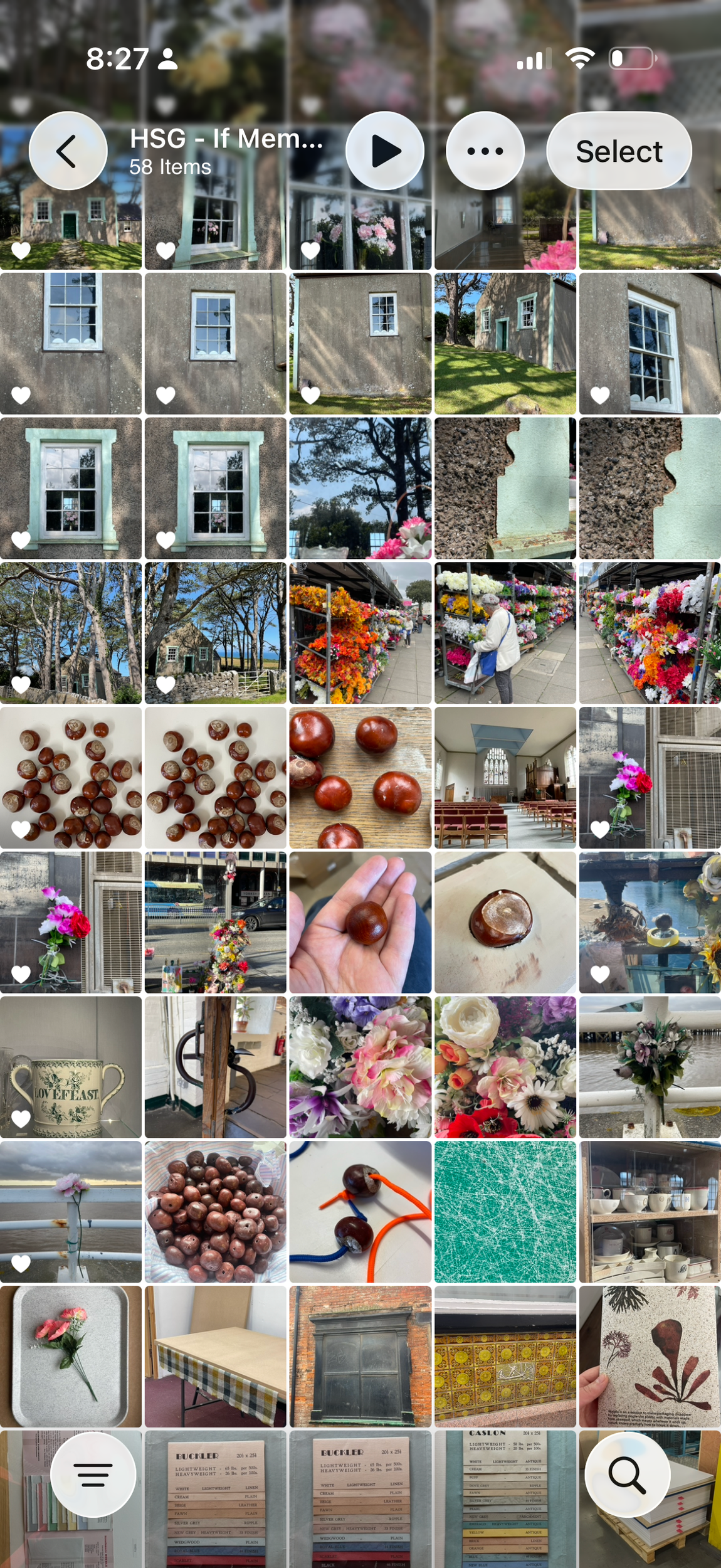
A phone full of moments: Charlotte Dawson’s photo gallery and visual inspiration for her Humber Street Gallery exhibition If Memory Serves Me Well
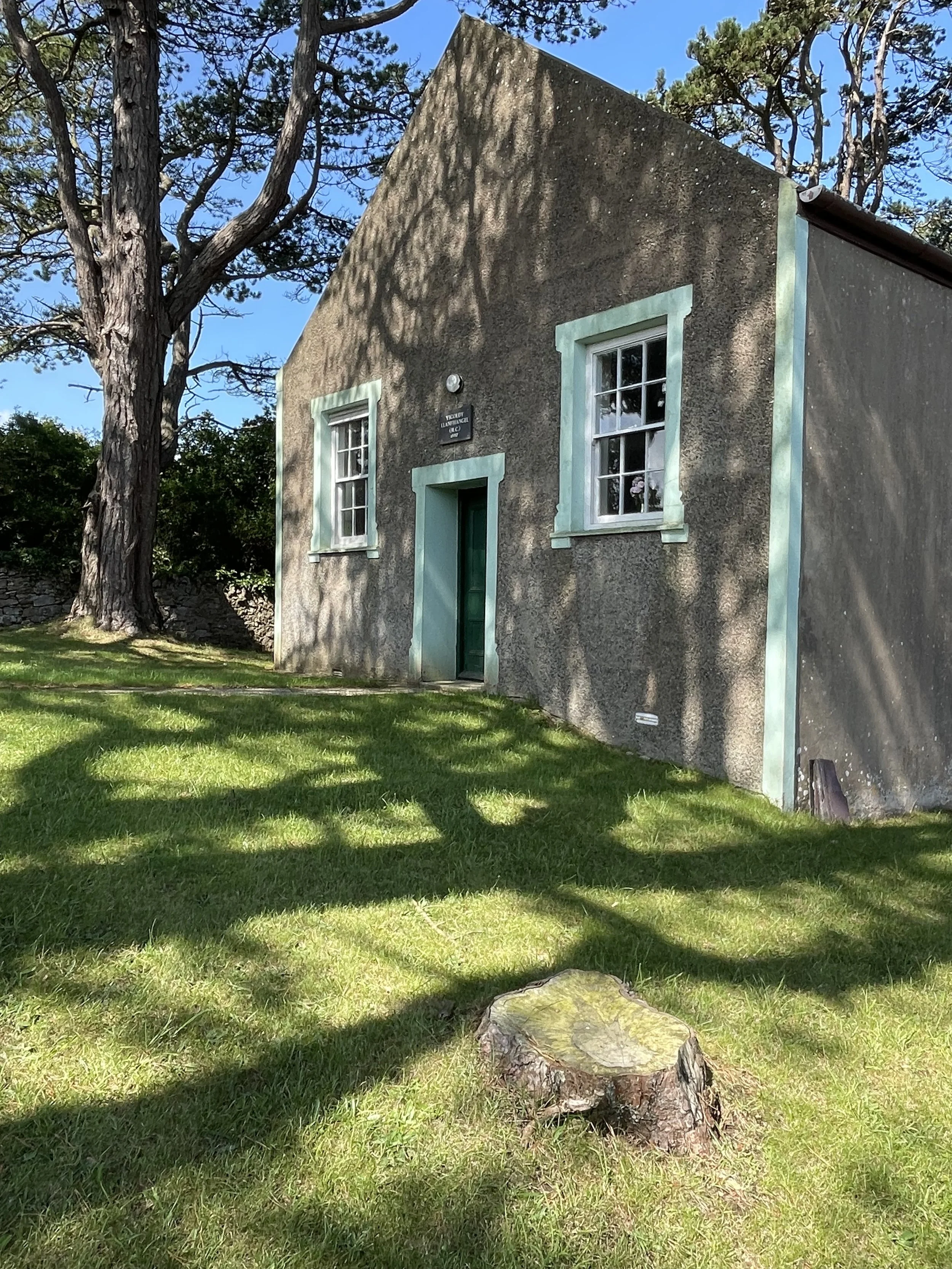
Dawson’s previous project Underside/Understood came together in a similar way. Spray-painted symbols road workers leave to flag repairs, gravestones with layout errors — one, in a Welsh cemetery, carved by hand with the word "body" split awkwardly across two lines because the stonemason misjudged the space. Three unrelated images, photographed separately over months only later revealed "they're talking to the same thing," she says — "this presence of people," whether it's a stonemason, a road worker, or whoever left the mark. "It's all about signposting, leaving a mark, and the underneath, the ground." Months of collecting images becomes what Dawson calls a "dawning on me."
This is where Dawson's work becomes, to me, genuinely moving. Across everything she makes, there's a recurring interest in someone who isn't present but is unmistakably there. An anonymous person who’s left a trace. It’s there most tenderly in the artificial flowers that thread through her work and continue to do so in the new Humber Street show: the ones left as roadside memorials, in church windows, or in municipal bathrooms by faded potpourri. "There's this person who's taking care of this space," Dawson says, "who's not part of our imagined imagery of that building, but actually is really part of that building." It's the same instinct behind the church kneelers she's drawn to. Hassocks stitched by hand, by people with no formal role in the church hierarchy, worn down over the years. None of this is about religion, she's careful to say. It's about the trace of someone else's care in a space that isn't supposed to register individuality at all, "the street is meant to be clinical," as she puts it, "and we're not meant to leave our own marks on it, but we do."
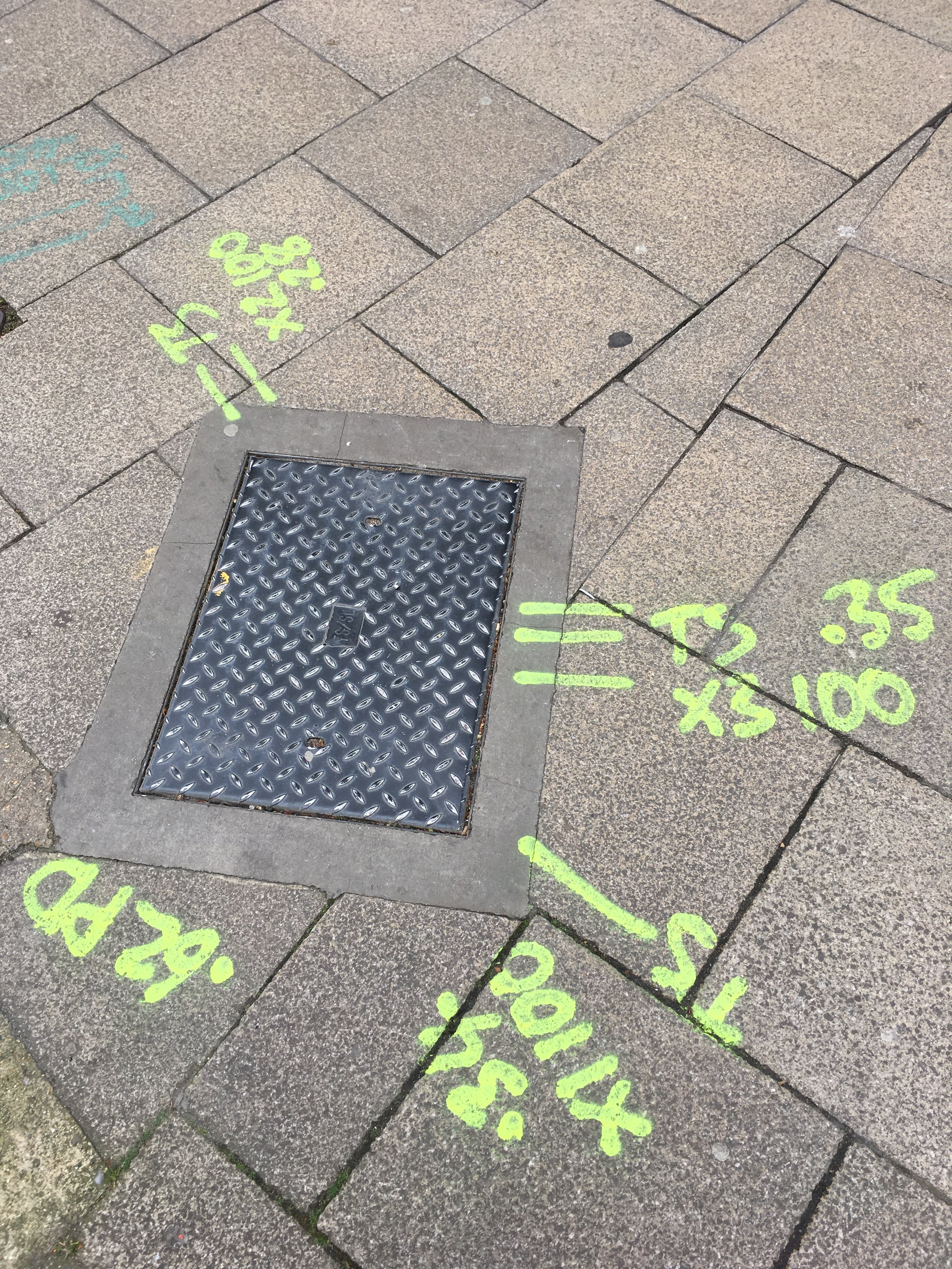
The imagined other: Charlotte Dawson’s visual research
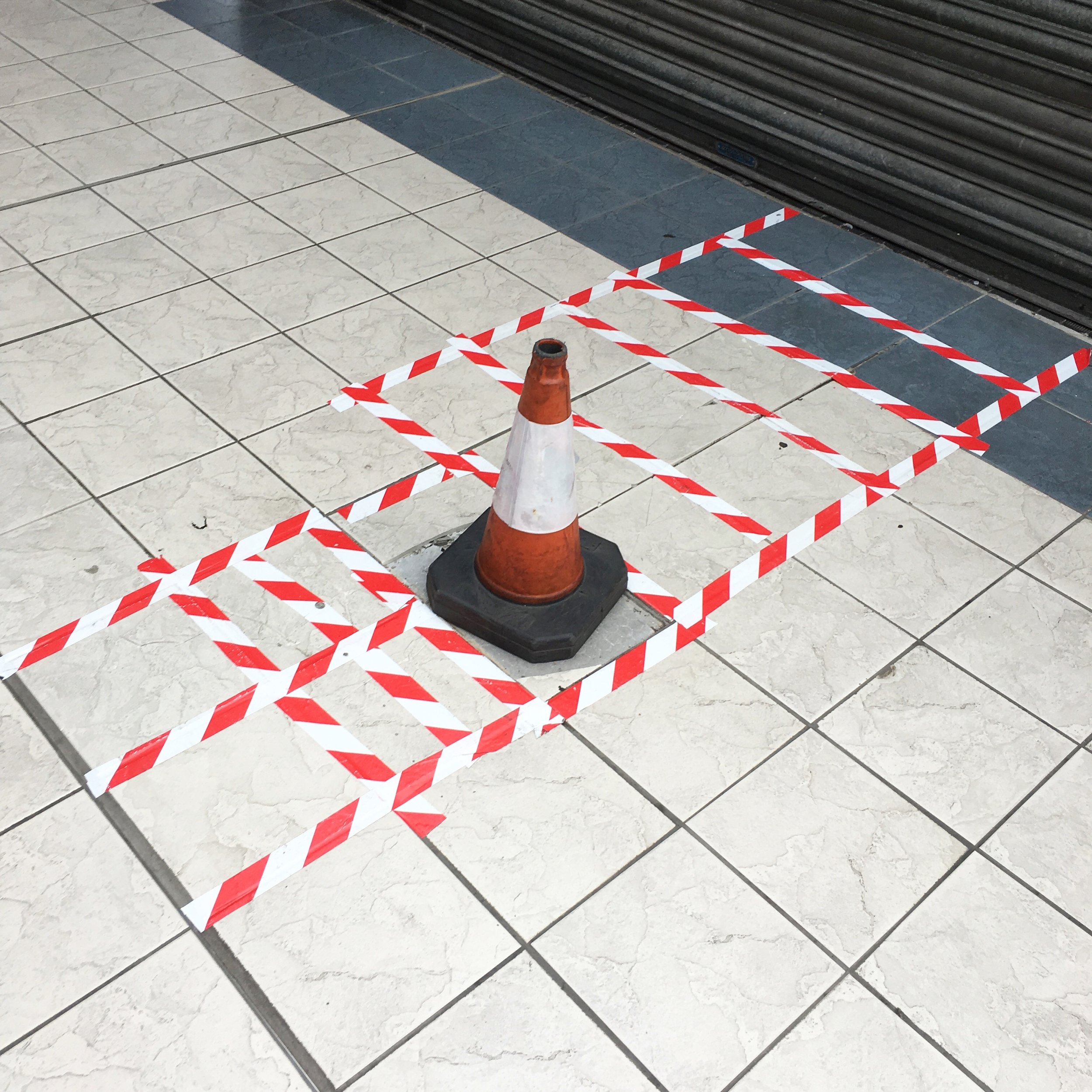
The imagined other: Charlotte Dawson’s visual research
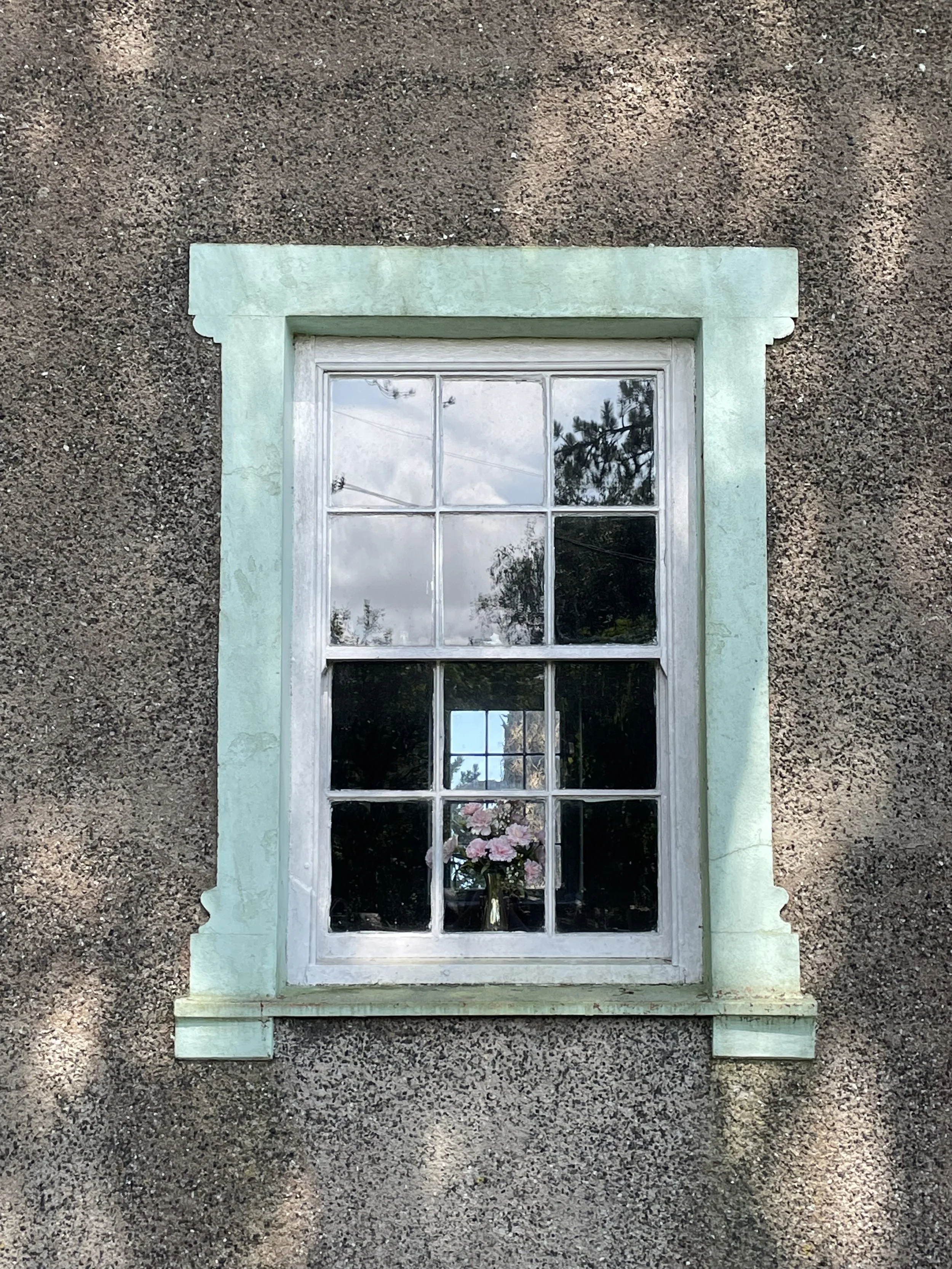
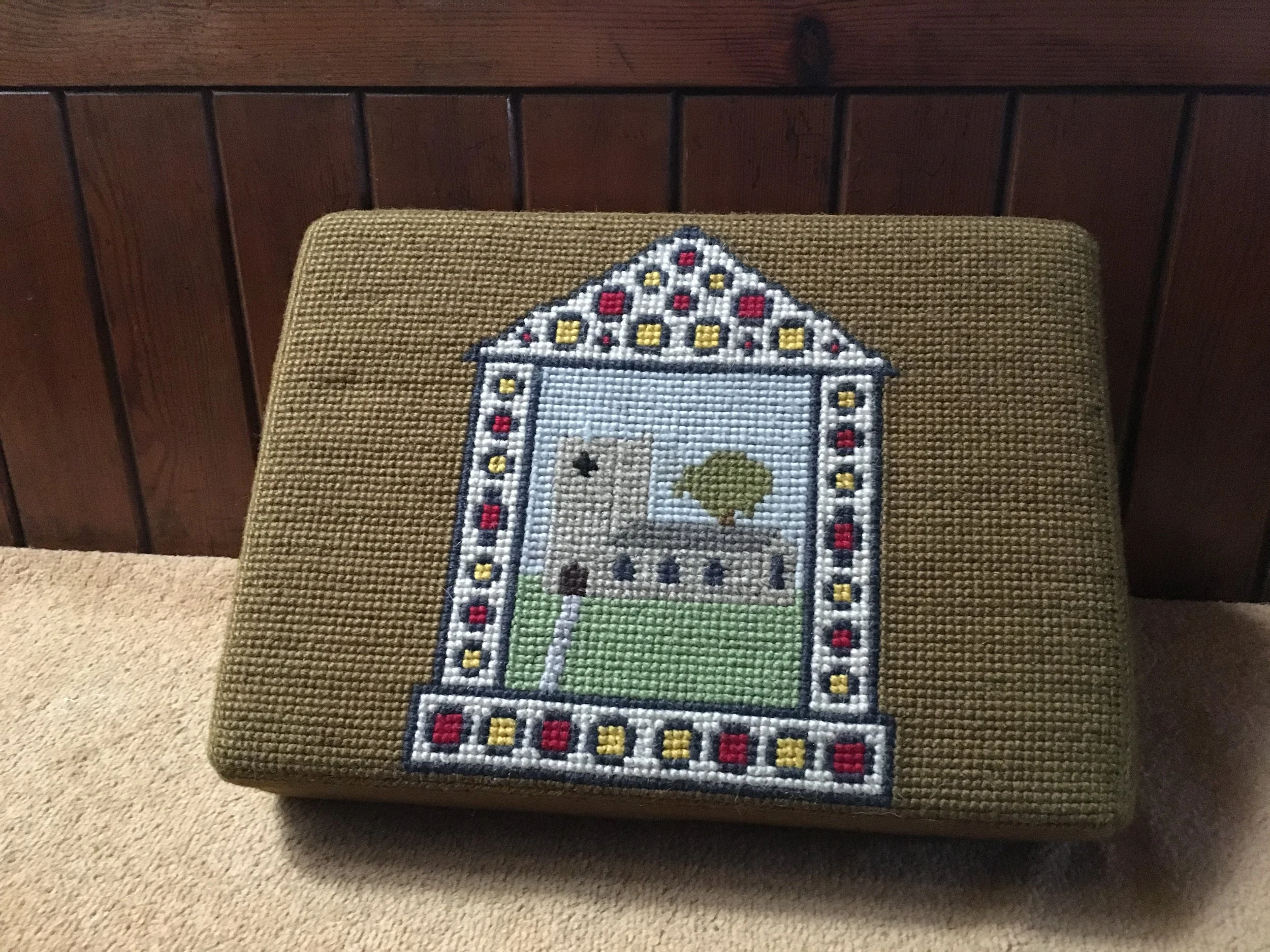
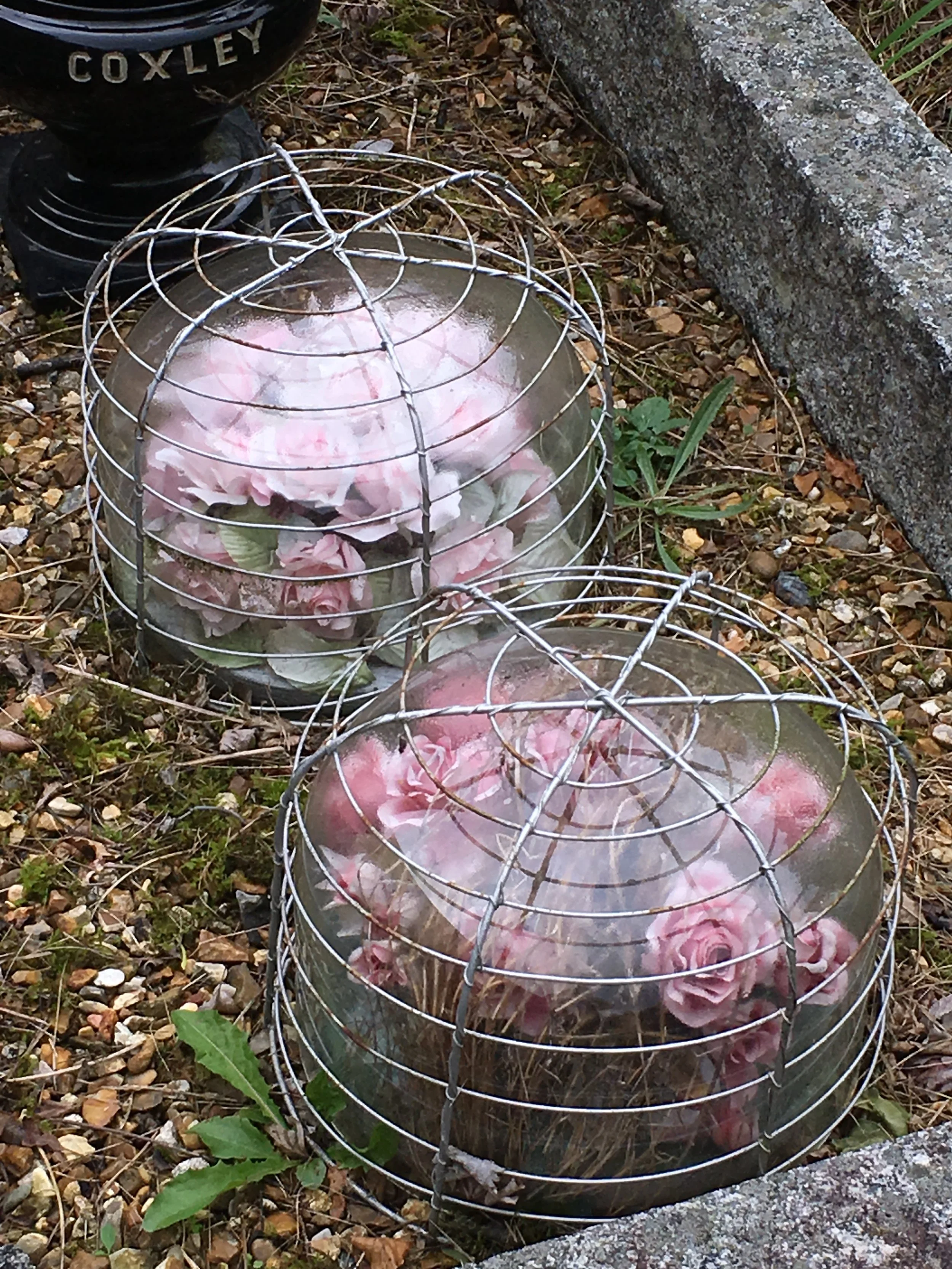
Where one piece ends, another begins: Charlotte Dawson’s Humber Street Gallery show visual inspiration
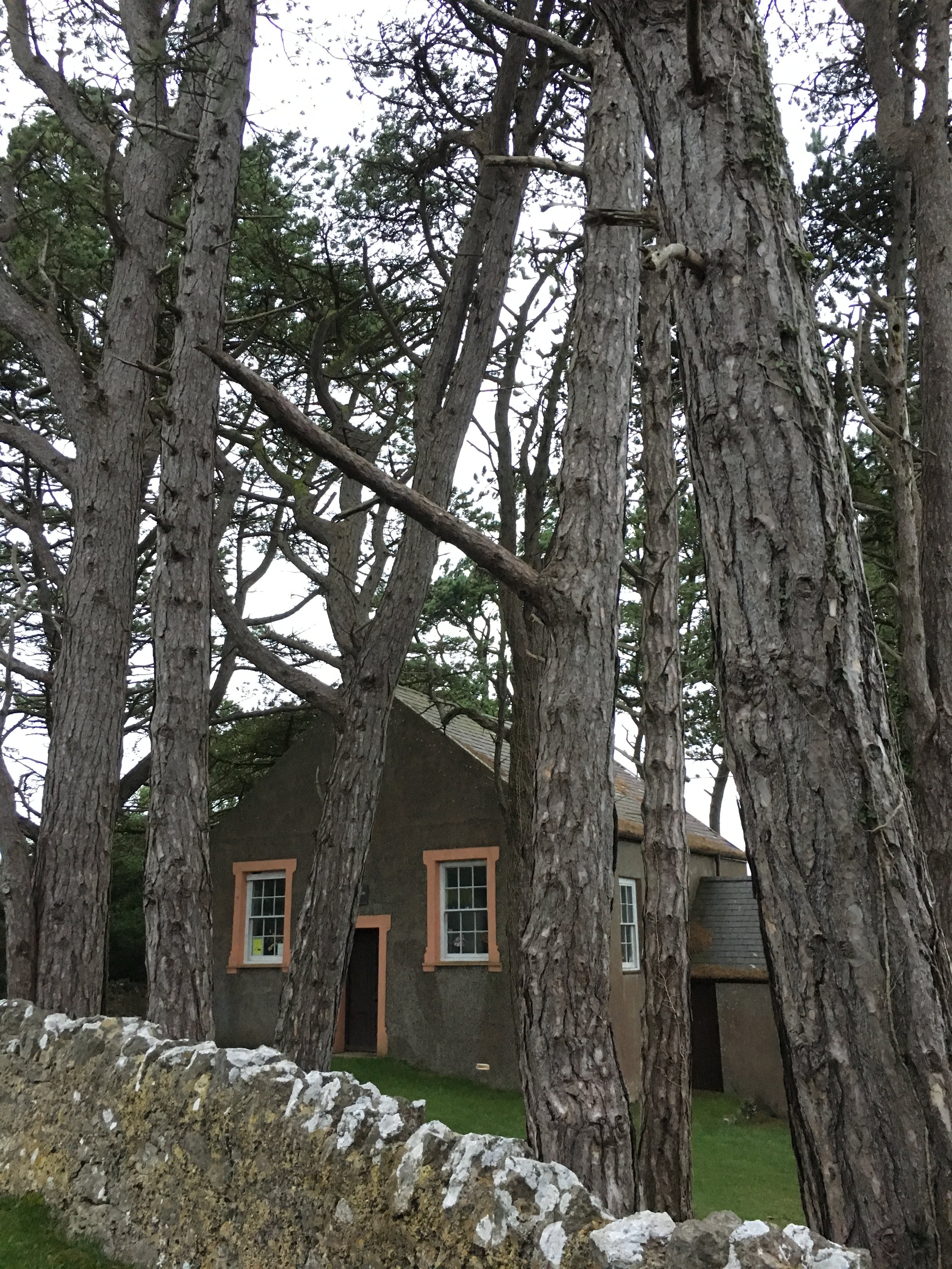
Dawson’s projects rarely fully end. Photographs resurface, sometimes years later, in something else entirely. The clearest example is a small floral motif, bound with cable ties, that appears on one of the jesmonite plates from the Here/There project: a body of work born out of a residency in Blackpool. That same site, and the same cable ties, went on to become the subject of an entirely different piece: Just Passing I, a hand-stitched embroidery Dawson began during the first Covid lockdown, when she couldn't get into her studio to make sculptures. Three years later, passing through the same Blackpool site by chance, she found a new set of flowers had been laid in exactly the same spot. Proof that whoever had been leaving them was still returning. That second encounter became Just Passing II. The fading of the fabric in the earlier piece, she suspects, may even mirror the literal bleaching of the flowers it depicts, though she admits she still isn't sure whether that's the sun, or simply how the materials have aged. Dawson has another embroidery on the go that is related somehow to the Humber Street Gallery exhibition in that it’s inspired by the Methodist church that has been a huge reference for this show. She's been dipping in and out for three years but hasn’t worked on it for the last six months. It’ll be her largest embroidered piece once final.

Flowers on a plate from Charlotte Dawson’s HERE/THERE series, photography by Peter Martin
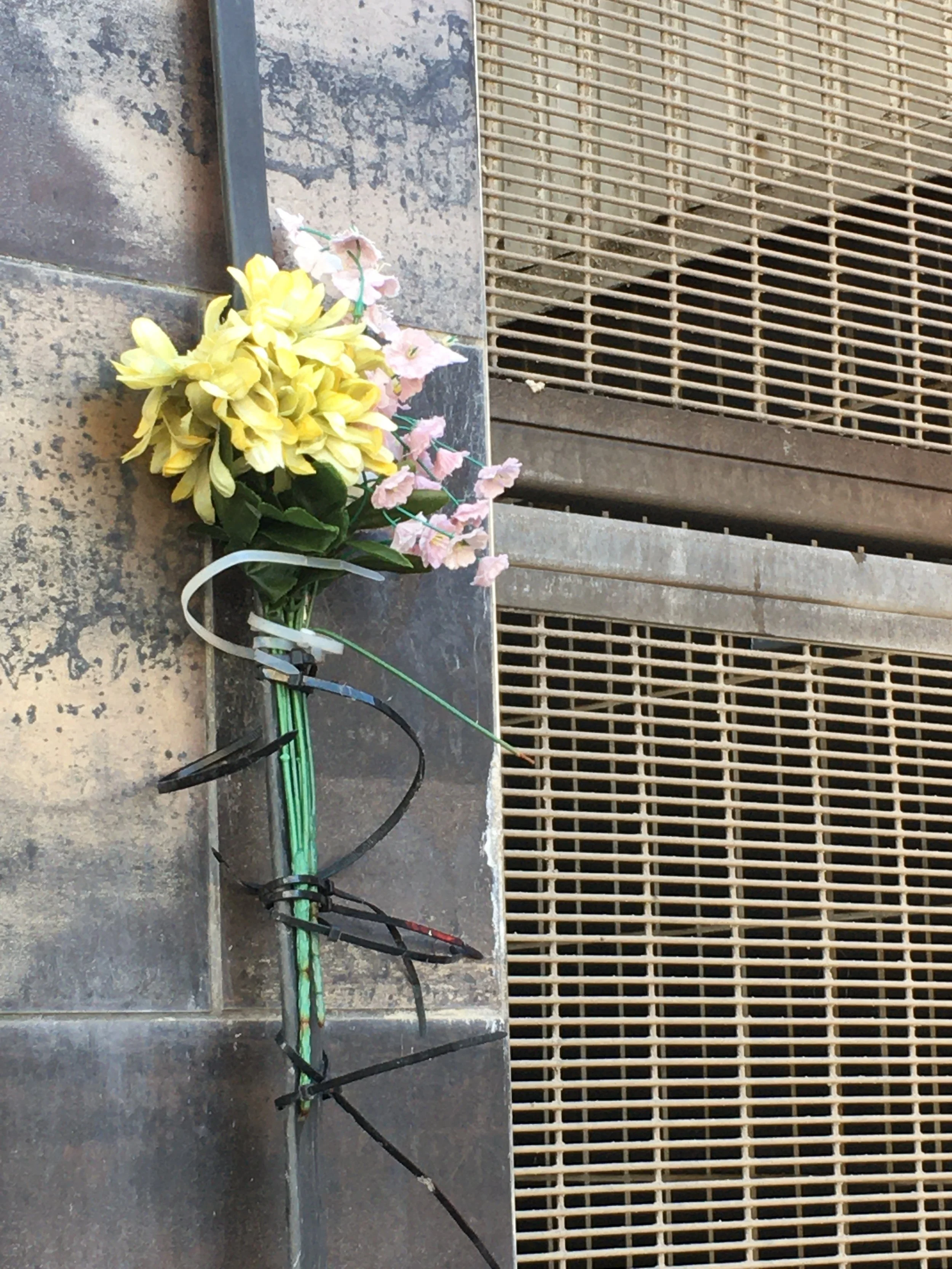
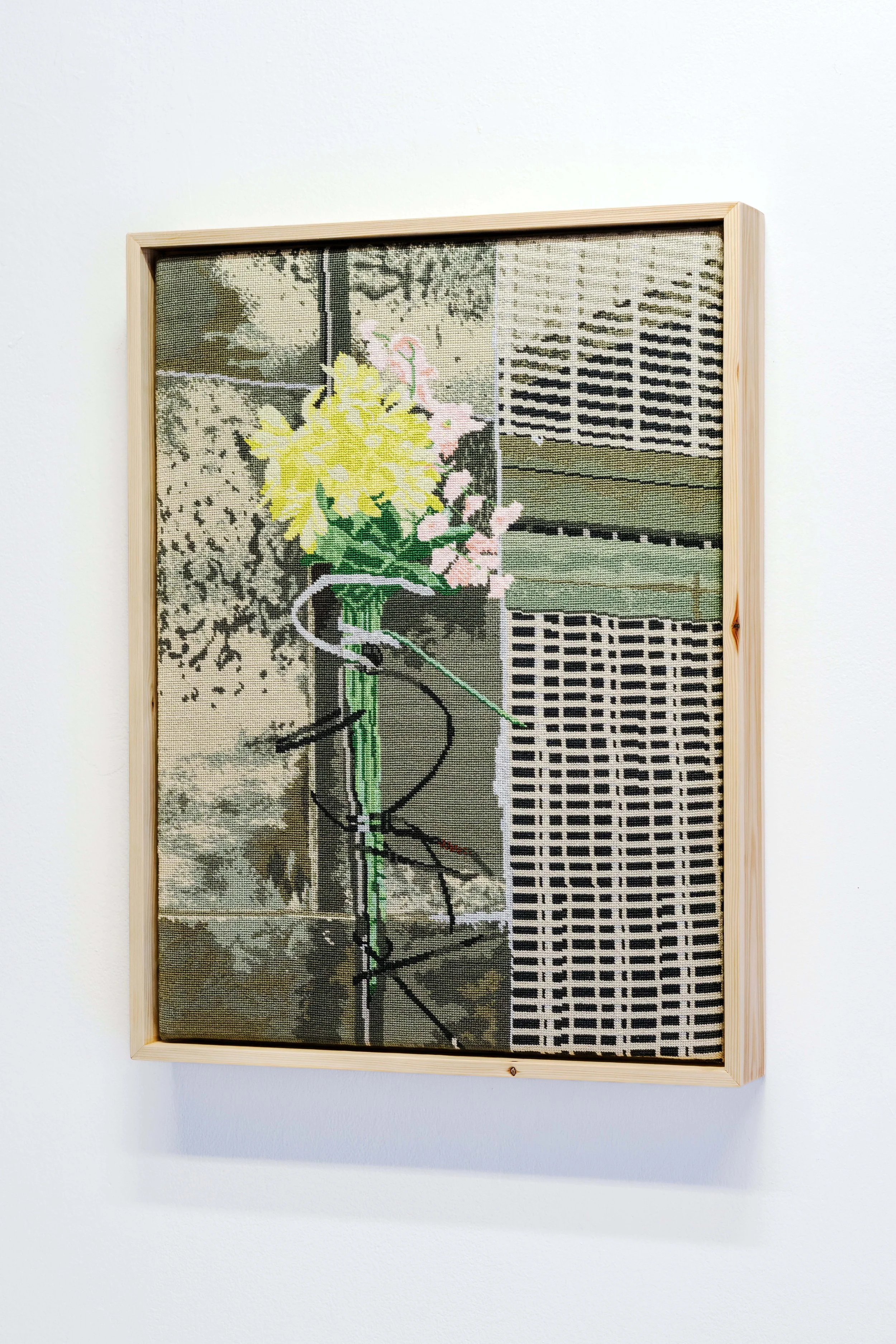
Just Passing I
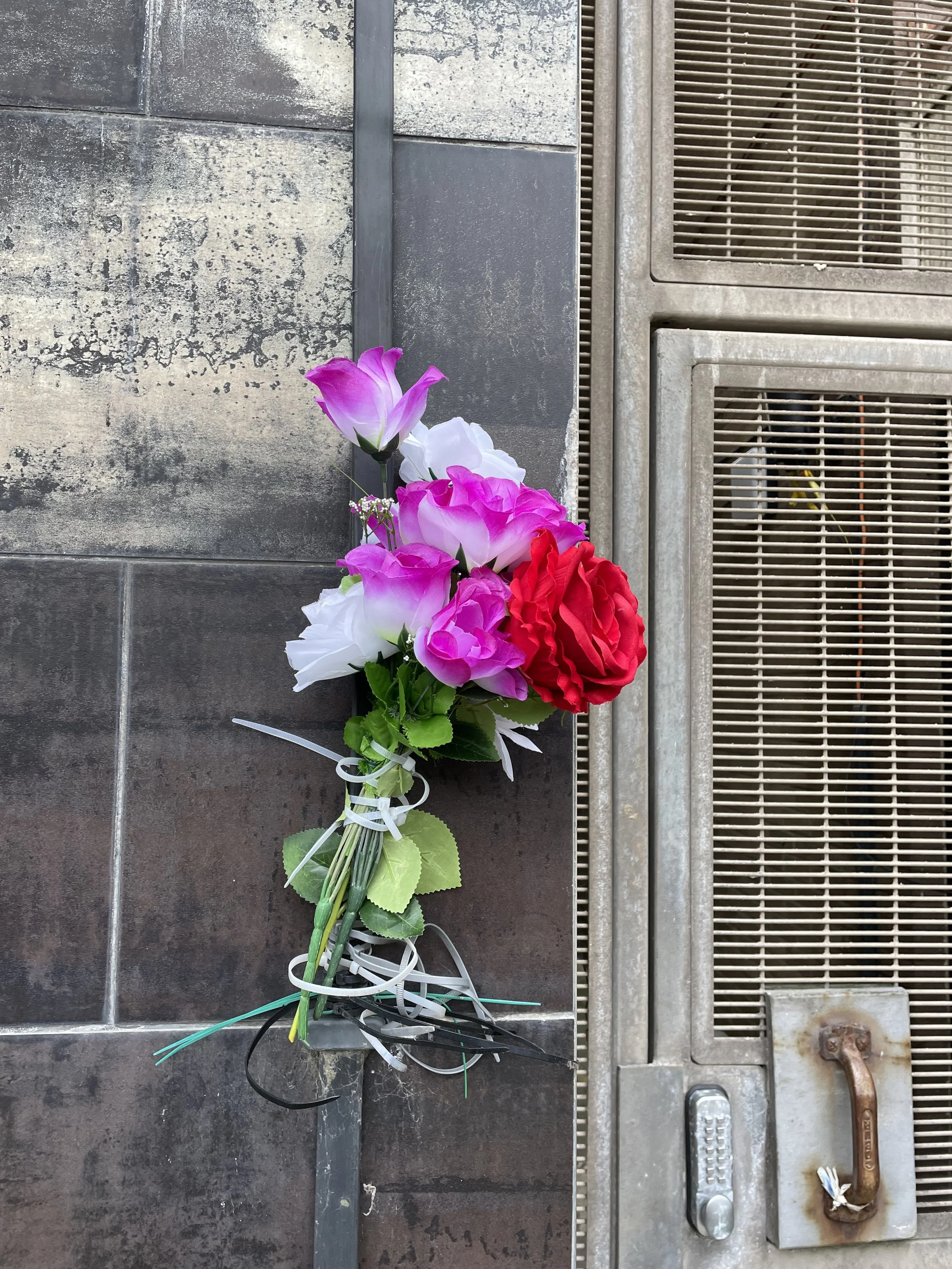
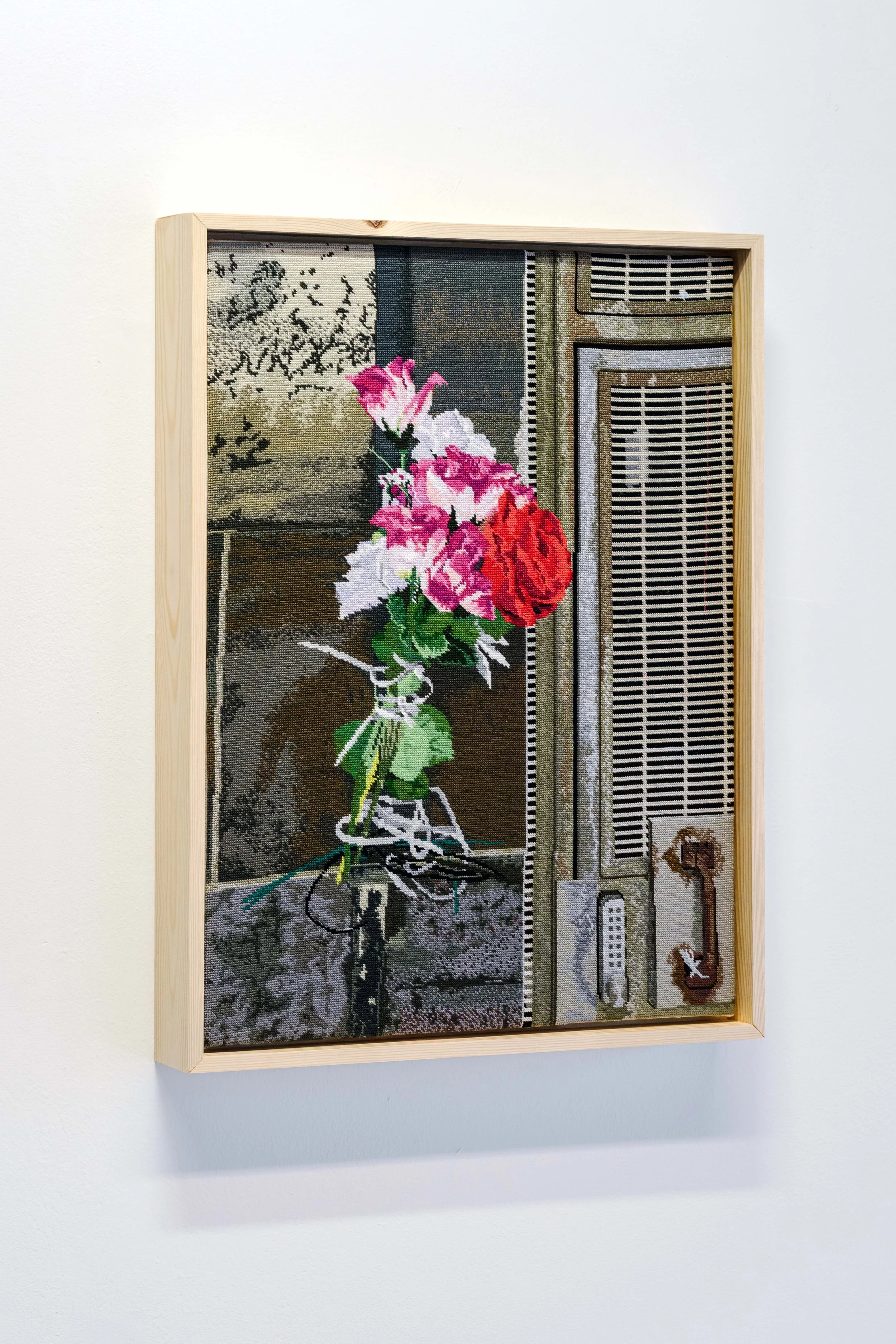
Just Passing II
Dawson's relationship to collecting in relation to her practice started during her first residency in Stoke-on-Trent. She found herself in a city built almost literally on ceramic history. Shards mixed into demolition rubble, buried under the foundations of its buildings. It led her to an archive for the first time, not to research the past in the abstract, but to look at objects formally designated as worth keeping. That distinction, between an object still in use and one that's been acquired, has stayed with her ever since. "I'm really interested in the point of the last use," she says, that moment an object stops being used by someone and is fixed, permanently, in a collection. It's rarely the owner's decision, and it often coincides, she points out, with the owner's death: "they're the last person that gets to use this." An ordinary object, in that instant, becomes something else entirely — a plate, a cup, a marker post, forever attached to a life that's ended. You can see the same instinct playing out at home, long before any of this had a name. The Dawson family didn't collect in any formal sense, but display shelves ran around the top of a room, filled with teacups and saucers too precious from great-grandparents to use — some broken while dusting, superglued back together, kept anyway. Several of the plates her mother collected came from local Methodist chapels, which is part of why the teacups appearing in the Humber Street show carry what Dawson calls a "utilitarian" colour palette.
What's different about this show, Dawson tells me, is that it didn't grow out of a residency. Her previous bodies of work — Here/There, Underside/Understood — each began with time spent in a specific place. Humber Street began instead as a conversation with curator Lauren Wilson, built around what Dawson was already thinking about rather than a commission to respond directly to Hull. And yet she still visited — noting, in particular, the memorial to lost fishermen on the street just behind the gallery, with its own artificial flowers. "There's a universality to the objects on show," she says, "but I think it fits into the context of Hull." It's a more exposed way of working, she admits, "you're just making a body of work that's your interest," trusting that what it will resonate. A recent studio crit, done without any explanation (she could only show the work, not explain it) reassured her, "People had really good responses to it without having any knowledge about what the work was bringing," she says. "I'm not mad, and the things I'm thinking about are relevant." Which brings us back to that unrevealed piece and the childhood habit of collecting it grew from, about to be walked through by strangers who'll have no idea what they're retracing.
Ending with some more photographs collected ahead of the Humber Street Gallery show. Intrigued to see what Charlotte will make us notice next.
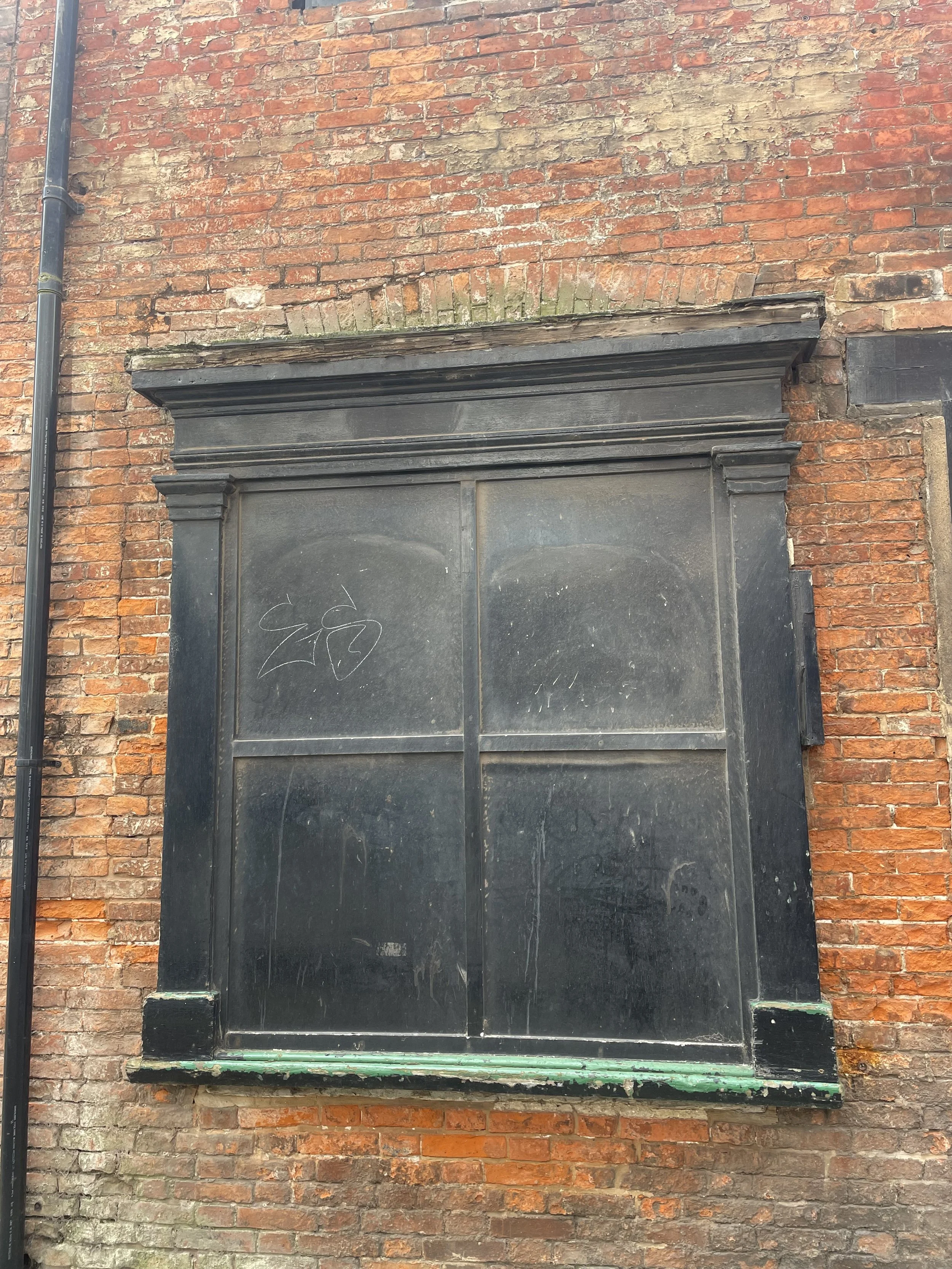
If Memory Serves Me Well: Charlotte Dawson
10 July – 20 September 2026
Humber Street Gallery
64 Humber Street
Hull HU1 1TU